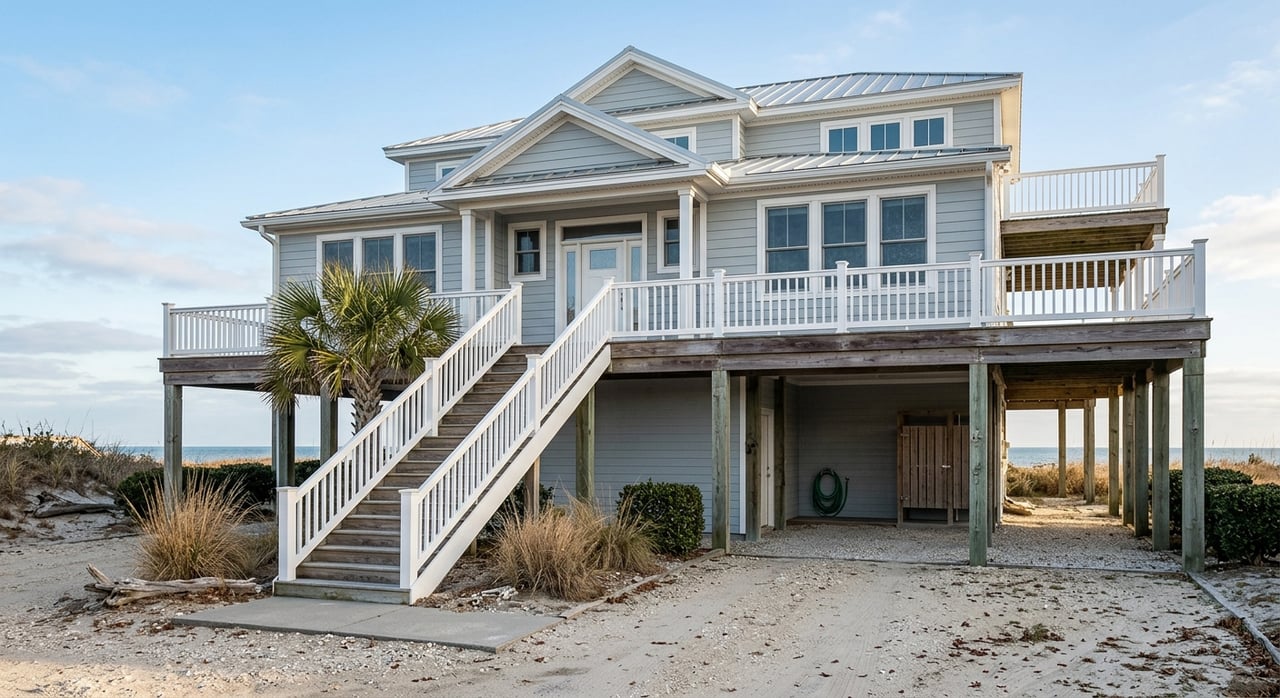
Corolla Off-Season Home Ownership: What to Plan For
June 4, 2026
June 4, 2026
If you own, or plan to own, a home in Corolla, the off-season can surprise you in ways summer never does. Quieter streets and thinner rental demand may sound simple on paper, but winter weather, storm timing, maintenance needs, and carrying costs all still keep moving. If you want fewer surprises and better long-term results, it helps to know exactly what to plan for before the busy season returns. Let’s dive in.
Corolla’s off-season is shaped by its barrier-island setting. The Outer Banks tourism bureau describes winter as quieter, with many restaurants and small shops closed, while spring and fall are milder shoulder seasons and summer remains the busiest period. For owners, that means your home may be used less often at the same time it still needs active oversight.
Nearby coastal weather data helps set expectations, even though it is not Corolla-specific. NOAA normals for nearby Manteo show average highs and lows of 54.9 and 40.2 degrees in December, 50.7 and 35.6 degrees in January, and 52.5 and 37.3 degrees in February. The same data shows several days each month in winter when temperatures can reach 32 degrees or colder overnight.
That matters because off-season planning in Corolla is not just about slow bookings. It is also about protecting pipes, checking moisture, monitoring systems, and preparing for weather-related disruptions when you may be away from the property.
Many owners think of the off-season as December through February. In Corolla, the planning window is broader because storm risk overlaps with the quieter rental months before and after summer. The Atlantic hurricane season runs from June 1 through November 30, so your ownership plan should include both pre-storm preparation and post-storm follow-up.
A smart approach looks at the full calendar, not just one season. Winter brings freeze concerns and lower traffic, while late spring through fall can require storm-readiness and recovery planning. If you are an absentee owner, that makes a written schedule even more valuable.
A vacant home does not pause wear and tear. In fact, a home that sits empty for stretches often needs more structure and oversight, not less. NC State Extension recommends treating maintenance as an ongoing budget item, with housing experts suggesting 1% to 3% of market value per year for maintenance and repairs.
NC State also recommends inspecting the house and yard at least every six months, and preferably every three months. HVAC equipment should be serviced before both heating and cooling seasons. In a coastal market like Corolla, that routine can help you catch small issues before they become expensive ones.
Salt air and moisture raise the stakes. FEMA notes that salt spray and onshore winds can speed up corrosion, especially on exposed metal components, and corrosion-resistant connectors and fasteners are important in coastal areas. For Outer Banks owners, that means deferred maintenance can get costly faster than it would inland.
Even in a coastal setting, winter protection matters. NC State advises owners to insulate pipes near exterior walls, crawl spaces, and attics, disconnect and drain outside hoses, and keep indoor heat set no lower than 55 degrees during cold weather. If you are away, having someone check the property daily during a freeze event is also recommended.
Those basics can help reduce the risk of burst pipes and water damage. NC State also notes that gutters and downspouts should remain open and in good repair, and crawlspaces should be checked regularly for dampness, vapor barrier condition, and termite activity. In an area where moisture is a constant factor, those checks are not optional.
A practical winter checklist for Corolla often includes:
Because the Atlantic hurricane season runs through November 30, owners should think beyond simple seasonal opening and closing tasks. Storm preparation should happen before June 1, not after a forecast starts getting attention. Waiting too long can make vendor scheduling harder and limit your options.
For absentee owners, the most useful plan is usually the most practical one. Keep an updated vendor list, know who can perform walkthroughs, and decide in advance who handles pre-storm securing and post-storm inspections. That level of planning can reduce delays and help you protect both revenue and property condition.
If you plan to rent your Corolla home, it is important to budget around seasonality. The Outer Banks tourism bureau describes summer as the busiest period, while winter is quieter and many businesses operate on reduced schedules or close seasonally. Occupancy data from the Visitors Bureau also shows a strong summer skew, with June, July, and August far above January and February.
The takeaway is simple: do not expect winter to perform like summer. Off-season revenue planning usually depends more on shoulder-season bookings, pricing strategy, and shorter-stay demand than on peak-summer volume. That makes the quieter months a good time to reset rates, complete maintenance, and position the home for the next stronger booking cycle.
The off-season is not just downtime. It is often the best window to review what is working, what needs repair, and which updates may help the home perform better. If a property is used as a vacation rental, this is when owners can think clearly about upkeep, presentation, and operational changes before summer demand ramps back up.
For many owners, a productive off-season plan includes:
This kind of reset can support both current use and future resale value. It also helps reduce last-minute repair stress when the market gets busy again.
Purchase price is only part of the ownership picture in Corolla. A more useful question is what the home will cost you to carry each year, especially if you are not there full time. Currituck County’s adopted fiscal year 2025 to 2026 budget sets the countywide property tax rate at $0.62 per $100 of assessed value, plus $0.08 per $100 in the Corolla Fire Service District, for a combined $0.70 per $100 in that district.
The same county budget sets an annual solid-waste collection and disposal availability fee of $483 for Southern Outer Banks units with door-to-door service. Those numbers should be part of your annual ownership budget, alongside utilities, maintenance reserves, and insurance.
Property tax timing matters too, especially for absentee owners. Currituck County says tax bills are mailed in mid-August, due September 1, and become delinquent after January 5. If you do not monitor local mail closely, it is easy to let an administrative deadline sneak up on you.
Flood risk should be treated as its own line item. FEMA says most homeowners insurance policies do not cover flood damage, and coastal communities face risks from storm surge, waves, and erosion. FEMA also states that properties in Special Flood Hazard Areas have at least a 26% chance of flooding over a 30-year mortgage.
For Corolla owners, that makes flood insurance a planning item, not a footnote. Even if you are focused on mortgage, taxes, and routine upkeep, insurance structure deserves equal attention in your off-season review.
If your Corolla property will be rented short term, tax compliance needs to be part of your plan. Currituck County levies a 6% occupancy tax on gross receipts from short-term rentals. The county states that gross receipts include booking, security, pet, linen, and similar fees, and monthly returns are due by the 20th of the following month.
The county also notes that North Carolina sales tax of 6.75% applies to vacation rentals. There are exclusions, including a private residence rented fewer than 15 days in a calendar year and stays of 90 or more consecutive days. If your home will be income-producing, you should build these requirements into your operating process from day one.
If you want a cleaner ownership experience, keep your plan simple and repeatable. A realistic off-season checklist for Corolla usually includes:
The common theme is consistency. Corolla ownership tends to go more smoothly when you treat the property like an active asset that needs regular attention, even during quieter months.
If you are buying, holding, or preparing to improve a Corolla property, the best results usually come from having a clear operations plan behind the purchase. That means understanding true carrying costs, setting realistic off-season rental expectations, and making sure the home is ready for both winter weather and storm season. If you want help thinking through ownership strategy, rental readiness, or next-step improvements, Brook Sparks can help you build a more predictable plan.
Stay up to date on the latest real estate trends.


I provide expert guidance for buyers, investors, and property owners looking to maximize value in coastal real estate. By understanding each client’s goals—whether lifestyle-driven or investment-focused—I help identify properties that align with long-term success. My services also include consulting for existing owners, with strategies focused on pricing, performance optimization, and simple improvements that increase revenue and visibility year-round.