Corolla Oceanfront vs Soundfront Homes: Which Fits You?
June 11, 2026
June 11, 2026
If you are deciding between an oceanfront and soundfront home in Corolla, you are really choosing between two different ownership models. Both can offer waterfront living and rental potential, but they tend to differ in price range, revenue ceiling, upkeep, and long-term risk. If you want to buy with clearer expectations, this guide breaks down how each side of Corolla tends to work so you can match the property to your goals. Let’s dive in.
Before you compare waterfront types, it helps to understand how Corolla functions. Official tourism research shows most visitors come as family groups, many travel with six or more people, and a typical stay is about seven days. The same research shows May through October is the main travel window, which lines up with the weekly vacation-rental pattern many buyers are targeting.
That seasonal pattern also shows up in Currituck County occupancy-tax collections. Collections rise sharply in summer, with August 2024 reaching $5.13 million and August 2023 reaching $6.51 million. For you as a buyer, that means location and layout should be judged not only by personal use, but also by how well the home fits Corolla’s established vacation demand.
At a market level, Corolla home values sit around the high $800,000s to low $900,000s. Zillow shows an average home value of $898,047 and a median list price of $906,167, while Realtor.com shows a median listing price of $925,000. Homes are not moving unusually fast for a coastal market, with about 43 days to pending on Zillow and a median of 63 days to sell on Realtor.com.
Current active oceanfront inventory in Corolla ranges from a $799,000 Carova cottage to luxury properties listed at $3.25 million, $3.899 million, $4.099 million, and $5.795 million. Other active examples fall around $1.6 million to $2.25 million. In practical terms, oceanfront gives you the broadest pricing range and the highest top-end pricing.
That wider spread matters because oceanfront in Corolla is not one product type. Some homes are in the 4x4 area, where access is more remote and the setting is more self-contained. Others are in paved-road areas and established communities, which creates very different use and management considerations even within the same oceanfront label.
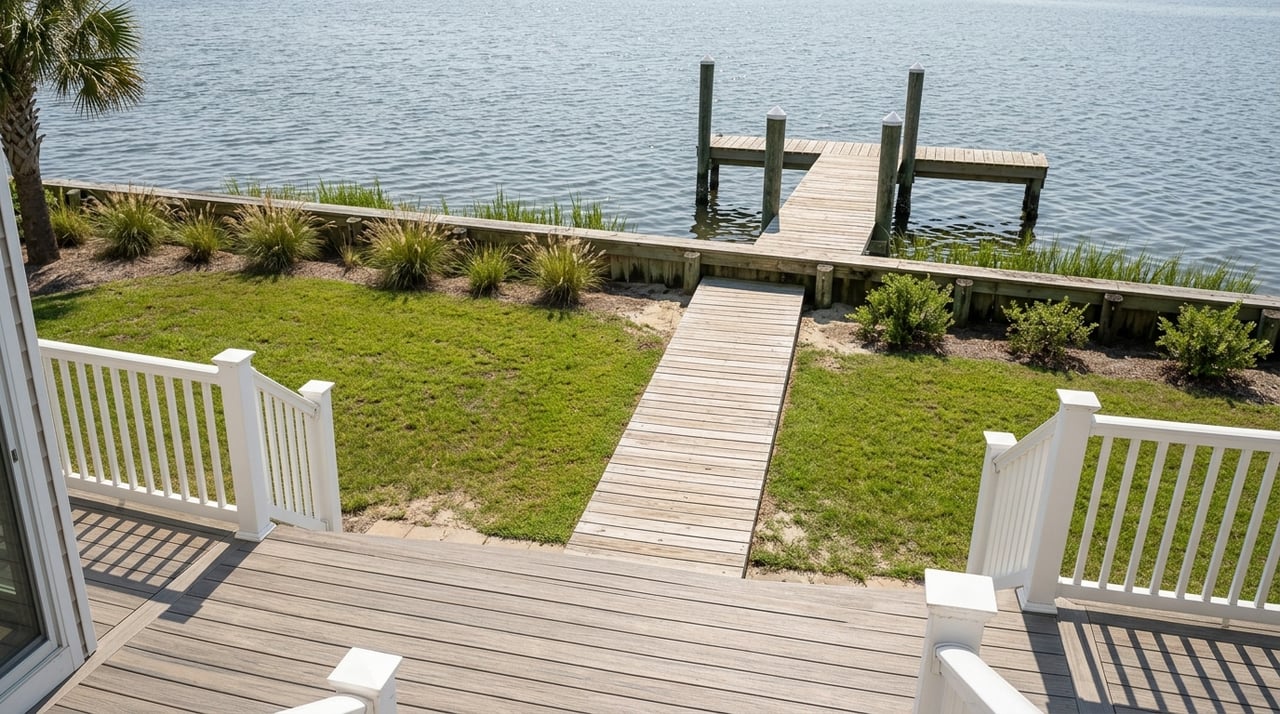
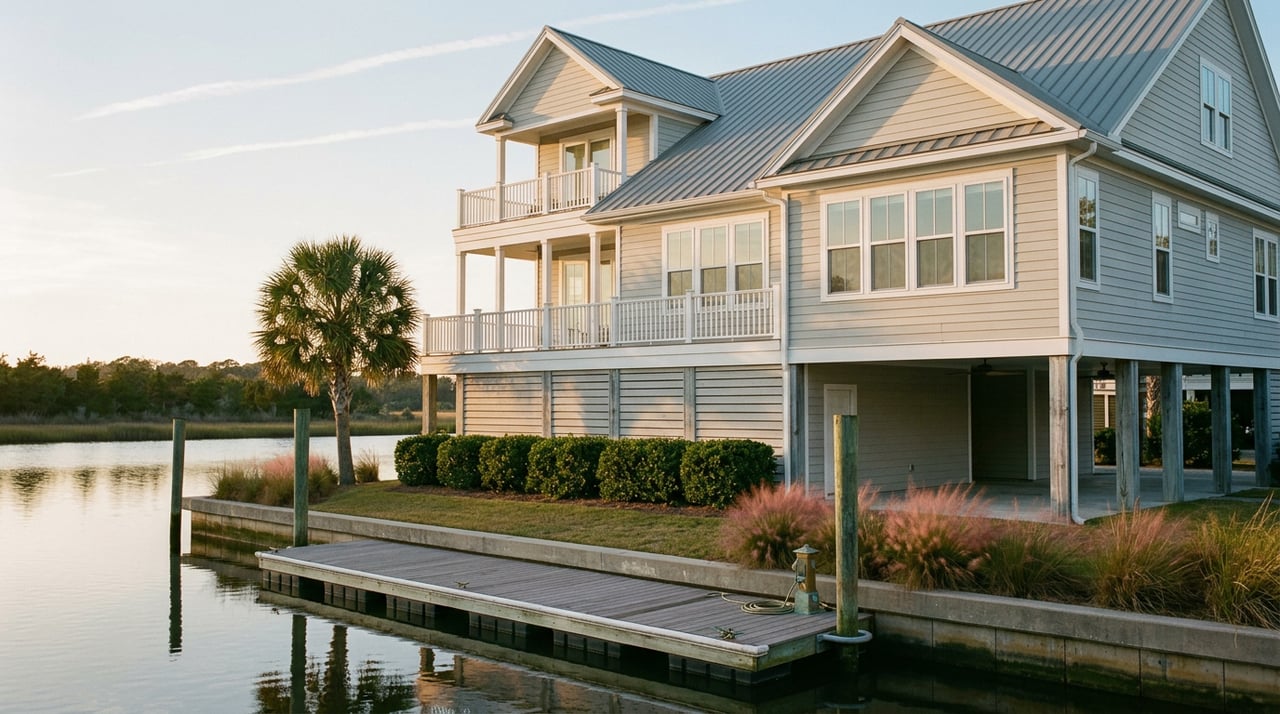
Current active soundfront inventory clusters mostly between $999,000 and $1.695 million, with one larger estate at $2.995 million. These homes often compete on sunset views, private piers, docks, and launch access for kayaking or paddleboarding. So while soundfront is often priced below the top oceanfront tier, it can still command strong numbers when the water access and amenity package are compelling.
A simple takeaway is this: oceanfront usually offers more price dispersion and more trophy-level inventory, while soundfront tends to cluster in a narrower band and compete on lifestyle features. That is based on the current active listing mix, not a formal MLS median by submarket.
If rental performance is part of your decision, Corolla’s visitor profile supports both property types. Family travel dominates, larger travel parties are common, and repeat visitation is strong. Research found that 71% of respondents had visited in the past year, 28% had visited 20 or more times, and 97% planned to return.
Based on current active listings, oceanfront usually carries the higher revenue ceiling. One active listing shows $96,000 in owner income in 2024 and 2025 plus $71,000 already booked for 2026. Others cite recent years around $200,000, $215,000 already booked for 2026, $300,000 projections, and even estimated annual income above $420,000.
That does not mean every oceanfront home will perform at those levels. It does mean buyers often pay a premium for direct beach access, strong nightly rate potential, and broad guest appeal in a market built around weekly vacation stays.
Soundfront should not be treated as a weak second choice. Current listings include examples with $94,331 already booked for 2026 and a projected gross of $150,000, while others market consistent rental income. For many buyers, that creates a useful middle ground: strong income potential without paying for the highest-priced oceanfront positioning.
If you are comparing both sides strictly as an investment, the current listing mix suggests oceanfront usually has the higher upside, while soundfront can still support six-figure gross income. The better fit depends on whether you want maximum rate ceiling or a different mix of price, owner enjoyment, and operating profile.
Waterfront homes in Corolla do not just differ in view and access. They also differ in what you are likely to maintain over time. Currituck County’s coastal permitting and hazard guidance gives a useful framework here.
Currituck County states that oceanfront property adjacent to the frontal and primary dune system faces greater risk of flooding and coastal erosion. The county’s 2026 shoreline-assessment update says the stretch between the Horse Gate and Corolla Village Road remains one of the county’s most vulnerable oceanfront areas. The county also continues to monitor Corolla and Pine Island for shoreline change and structure vulnerability.
For you as an owner, that usually means closer attention to dune conditions, beach access structures, exterior wear, and parcel-specific hazard factors. The exact cost depends on the site, elevation, and improvements, but oceanfront ownership often comes with more exposure to the physical pressures of the Atlantic side.
Soundfront is generally less exposed to direct surf, but it is not low-risk or maintenance-free. Currituck County notes that estuarine shorelines on the sound side fall within 75 feet of the normal water line and may require permits for work such as bulkheading, pilings, docks, dredging, and shoreline alteration. That means your maintenance focus may shift away from dunes and toward piers, docks, bulkheads, and shoreline hardscape.
In short, oceanfront tends to bring more coastal exposure, while soundfront often brings more infrastructure-related waterfront upkeep. Neither side is hands-off. They are just different operationally.
One common mistake is assuming soundfront means low flood exposure. Currituck County specifically warns that storm surge can affect both the Currituck Sound and Albemarle Sound depending on storm track. So if you are buying soundfront, flood planning still matters.
The same parcel-by-parcel mindset applies on the ocean side. Currituck County advises owners to check flood hazard maps and floodplain rules, and current oceanfront listings include examples in X flood zone. That tells you insurance and risk outcomes can vary substantially by location, elevation, and lender requirements.
The practical takeaway is simple: do not generalize from the address alone. Verify flood maps, permitting considerations, shoreline conditions, and lender-driven insurance requirements for the specific parcel you want to buy.
The best choice usually comes down to what you want the property to do for you. In Corolla, many buyers are balancing second-home use, rental income, and long-term asset performance at the same time.
Oceanfront is often the stronger match if your priority is top-end rental potential or a flagship family property with immediate beach appeal. It can also make sense if you are comfortable underwriting more weather and shoreline exposure in exchange for stronger income upside.
Soundfront often works well for buyers who want waterfront living and investment value, but do not need direct Atlantic frontage to meet their goals. In some cases, it can offer a better balance between acquisition cost, owner enjoyment, and revenue potential.
When you tour Corolla oceanfront and soundfront homes, avoid comparing them on view alone. Instead, evaluate each one through the same practical filters:
This is where local market knowledge matters. A home with a lower asking price can still become the more expensive asset to own if maintenance, access, or insurance are not fully understood upfront.
In Corolla, oceanfront and soundfront homes can both be smart buys, but they usually serve different priorities. Oceanfront tends to offer the broadest pricing range, the highest income ceiling, and the most exposure to erosion and coastal change. Soundfront often delivers a narrower price band, strong six-figure income potential, and a waterfront lifestyle built around sunsets, calmer water, and dock-focused amenities.
If you buy based on your actual use case, not just the view, you are more likely to end up with a property that performs the way you expect. If you want help comparing rental-ready homes, reviewing revenue potential, or pressure-testing the ownership math, Brook Sparks can help you evaluate Corolla opportunities with a data-driven, local approach.
Stay up to date on the latest real estate trends.


I provide expert guidance for buyers, investors, and property owners looking to maximize value in coastal real estate. By understanding each client’s goals—whether lifestyle-driven or investment-focused—I help identify properties that align with long-term success. My services also include consulting for existing owners, with strategies focused on pricing, performance optimization, and simple improvements that increase revenue and visibility year-round.