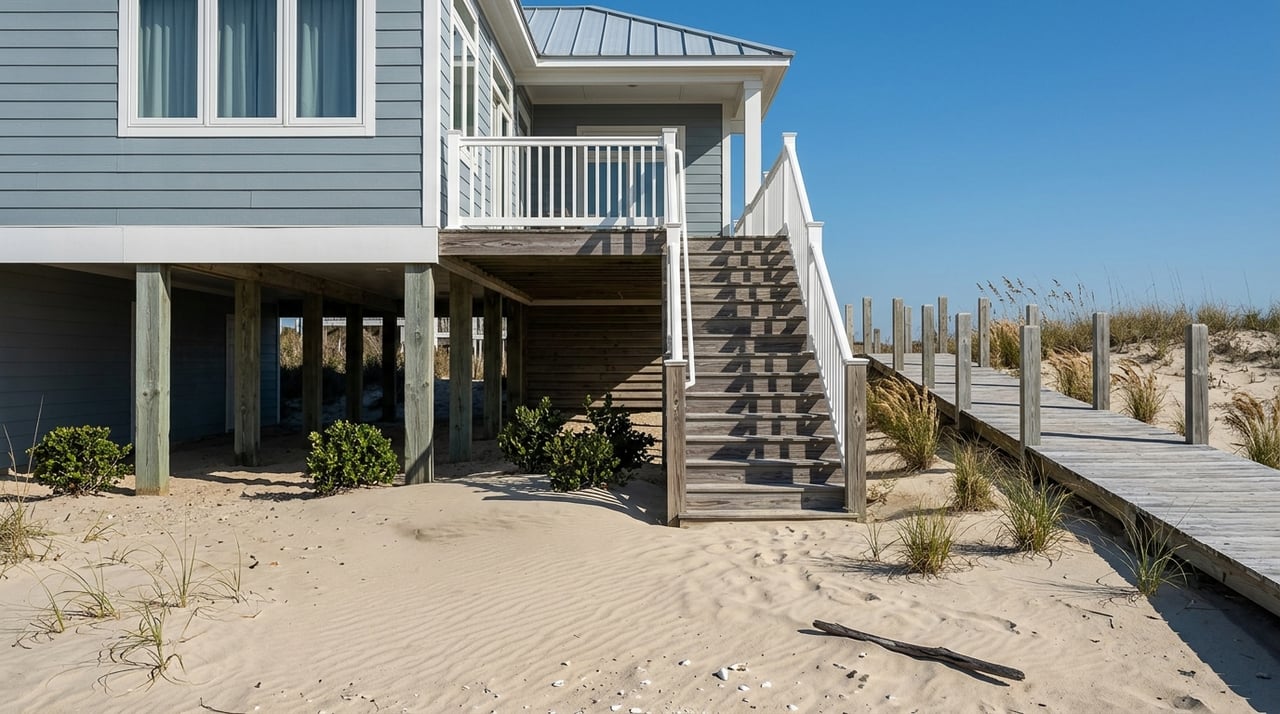
Nags Head Oceanfront vs Soundside: What Buyers Should Know
July 16, 2026
July 16, 2026
Wondering whether Nags Head is better on the ocean side or the sound side? That choice shapes more than your view. It affects how you use the property, what kind of upkeep you should expect, and how the home may perform as a second home or vacation rental. If you are comparing both options, this guide will help you sort through the real differences and choose the fit that matches your goals. Let’s dive in.
Nags Head sits on a barrier island between the Atlantic Ocean and Roanoke Sound. The town reports about 11.29 miles of ocean shoreline, and it treats the ocean shoreline and sound shoreline as distinct systems with different access patterns and property considerations.
That matters when you start looking at homes. The east side delivers the classic beach setting tied closely to tourism and shoreline activity. On the west side, especially west of US 158, the town says much of the year-round population lives there, and those areas are generally less tied to seasonal vacation rentals.
Oceanfront living is the version of Nags Head most people picture first. You are closer to surf, dunes, wind, and direct beach use, with the Atlantic shaping the daily experience.
The beach is also a public shoreline environment. Town and visitor information note that beach access is open to the public, locals, and renters, while some oceanfront and ocean-view rentals may have private beach access points.
If your priority is stepping out toward the beach, hearing the surf, and spending time on the ocean side every day, oceanfront is usually the clearest match. This side of town is closely connected to beachgoing and the visitor identity of Nags Head.
That also means more activity nearby in peak seasons. For some buyers, that energy is part of the appeal. For others, it is a factor to weigh against privacy and routine.
Nags Head’s comprehensive plan says the oceanfront is developed mostly with single-family residential properties, along with a mix of hotels, motels, cottage courts, and some multifamily development. The town also notes that the limited depth of oceanfront lots makes large-scale buildings difficult.
Because the shoreline is active and exposed to wind, waves, and erosion, the town continues to view the oceanfront as a low-density area where future structures should remain small-scale and adaptable. If you are evaluating a home for long-term use or investment, that context matters.
Oceanfront ownership often comes with the most visible shoreline-related upkeep. Nags Head’s shoreline management includes beach nourishment and dune management, and the town says wind can push sand onto walkways, decks, stairs, pools, and buildings.
The town’s ocean sand relocation program exists for that reason. In practical terms, oceanfront owners should expect ongoing attention to sand movement, exterior wear, and site conditions near the dune line.
The town notes that oceanfront work typically requires a CAMA permit. North Carolina setback rules for oceanfront construction are also based on long-term shoreline change rates and structure size.
For buyers, that means future improvements and repairs may involve more review than they would on an inland lot. Before you commit, it is smart to understand the site-specific rules that may affect how the property can be maintained or updated.
Nags Head describes itself as extremely vulnerable to flooding because it sits between the Atlantic Ocean and Roanoke Sound. The town identifies hurricanes, winter storms, seasonal high tides, and intense rainfall as the greatest flood threats.
For oceanfront owners, the exposure is especially direct. Historical records on the town’s risk page include multiple ocean overwash events affecting Nags Head, so flood planning, insurance review, and resilience should be part of the purchase decision from the start.
If rental income is one of your main goals, oceanfront property usually carries the strongest premium signal. The town’s tourism materials frame the beach as the primary attraction and the economic core of Nags Head and Dare County.
The town also states that in the Village at Nags Head, property closer to the ocean has higher value because of ocean proximity and seasonal rental income. While each property performs differently, that supports the broader market logic that direct beach access and views tend to attract the strongest vacation-rental interest.
Soundside living offers a different version of the Outer Banks. Instead of surf and direct beach frontage, you get Roanoke Sound views, calmer water conditions, and a setting that often feels more residential.
For many buyers, the draw is not just the view. It is the day-to-day rhythm, which may center more on paddling, sunset time, and neighborhood feel than on beach traffic.
The soundside is closely tied to water recreation with a different pace. Jockey’s Ridge State Park’s soundside access supports swimming, paddling, kiteboarding, and windsurfing, and the town identifies several public sound access points, including Harvey Sound Access, Jockey’s Ridge, West Danube Street, Little Bridge, and the Nags Head Estuarine Site.
If you picture your ideal day on calmer water or prefer sunset views over sunrise surf, soundside may fit better. It can still feel distinctly coastal, just with a different routine.
The town’s comprehensive plan identifies soundside areas such as Southridge, Old Nags Head Cove, and Roanoke Shores. It says the majority of development there is single-family residential.
Lot sizes in those neighborhoods range from about 6,000 square feet to more than 25,000 square feet, with most newer subdivisions at 15,000 square feet or larger. Compared with the tighter oceanfront strip, that usually creates a more conventional neighborhood pattern.
Soundside owners are not typically managing ocean-beach sand drifting across decks and stairs. Still, you are living on the same barrier island and should not assume lower exposure means no risk.
The town notes that Nags Head has experienced soundside storm surge and soundside overwash in past events. Its planning also points to an estuarine shoreline management strategy that prioritizes living shoreline projects where appropriate, so the maintenance conversation often shifts toward drainage, shoreline resilience, and flood awareness.
One practical difference is how access works. The ocean beach is publicly open, while sound frontage is generally private and not publicly open in the same way.
That distinction matters if you want predictable direct access from your property or if you are comparing how guests may use the area. It is one of the clearest lifestyle differences between the two sides.
Soundside homes can still be attractive to vacationers, especially guests who want paddle access, quieter water, or sunset views. But the town’s planning language is clear that the oceanfront is the primary recreation asset and that the strongest value signal tends to follow proximity to the beach.
In many cases, soundside homes may trade some of the oceanfront premium for more owner-oriented use, a more residential setting, and potentially simpler day-to-day upkeep. That can be a strong fit if your priorities lean toward personal use and operational ease.
The right choice usually becomes clearer when you focus on how you plan to use the property. A home that works well for a high-rental strategy may not be the same home that best fits your day-to-day ownership goals.
Here are the questions that tend to matter most.
The tradeoff is a more active shoreline environment. You should expect more attention to sand movement, dune conditions, erosion factors, and flood exposure.
The tradeoff is that soundside usually does not carry the same beach-driven premium as oceanfront. Access patterns also work differently, especially where private sound frontage is involved.
No matter which side you prefer, site-level due diligence matters in Nags Head. The town participates in FEMA’s NFIP and CRS programs, and it says property owners can benefit from its mitigation efforts through flood-insurance savings.
Even so, you should verify the flood zone, insurance requirements, and any property-specific regulations before making a final decision. That step is especially important when comparing homes with very different shoreline exposure or improvement constraints.
If you are buying with investment performance in mind, it also helps to compare each option through an ownership lens, not just a lifestyle lens. Think about expected upkeep, guest appeal, ease of use, and how the location fits your long-term plan for holding, renting, or eventually selling.
Oceanfront and soundside living in Nags Head are both appealing, but they serve different ownership goals. Oceanfront is the direct beach-and-surf option with the strongest access and rental appeal, along with more visible shoreline management demands.
Soundside is the quieter paddle-and-sunset option with a more residential feel, broader lot patterns, and a different maintenance profile. For most buyers, the best fit is not about which side is better overall. It is about which daily routine, risk profile, and property strategy make the most sense for you.
If you want help comparing oceanfront and soundside opportunities in Nags Head through both a lifestyle and ownership-performance lens, connect with Brook Sparks for a data-driven conversation about fit, upkeep, and long-term value.
Stay up to date on the latest real estate trends.


I provide expert guidance for buyers, investors, and property owners looking to maximize value in coastal real estate. By understanding each client’s goals—whether lifestyle-driven or investment-focused—I help identify properties that align with long-term success. My services also include consulting for existing owners, with strategies focused on pricing, performance optimization, and simple improvements that increase revenue and visibility year-round.