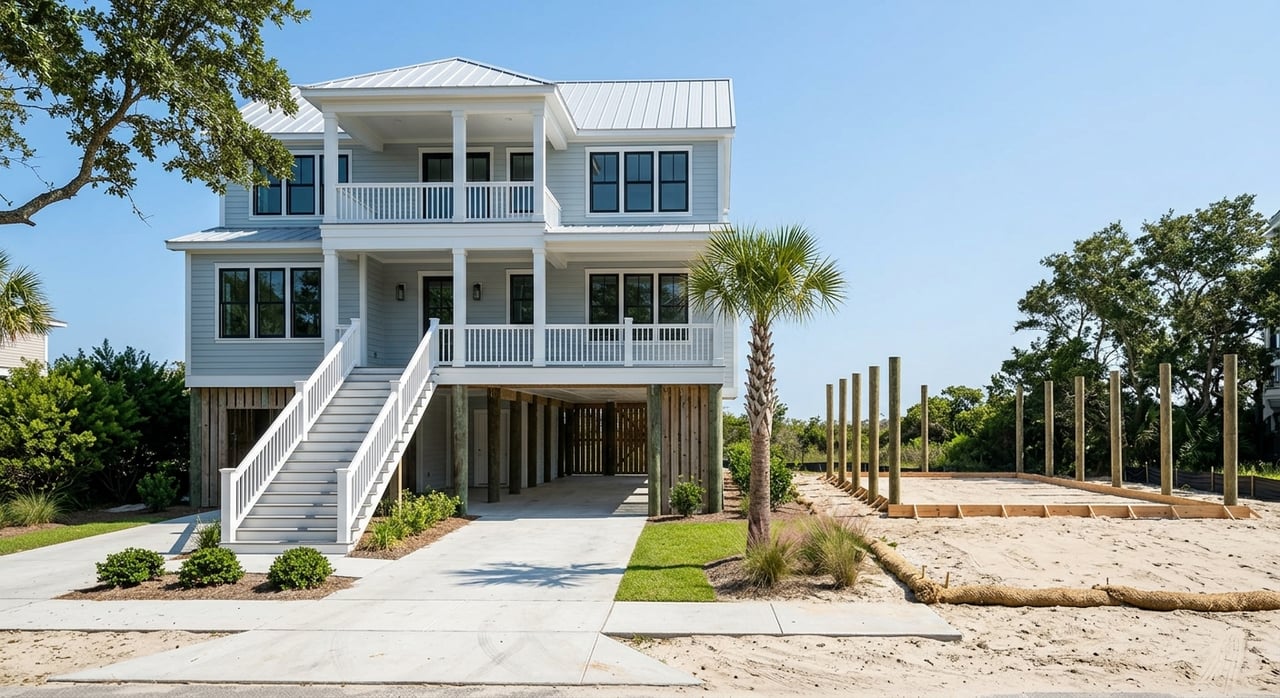
Buying Land to Build a Corolla Vacation Rental Home
April 2, 2026
April 2, 2026
Wondering if buying land in Corolla to build a vacation rental is a smart move? It can be, but only if you treat the lot like a business decision, not just a pretty location on the map. In Corolla, buildability, utilities, permitting, flooding, and rental demand all shape your return, so the best opportunities usually come from careful due diligence before you close. Let’s dive in.
Corolla is one of the Outer Banks markets where vacation-rental demand clearly supports larger homes. According to AirDNA’s Corolla market overview, the market has 2,076 active listings, 61% occupancy, and a $619.7 average daily rate, with inventory dominated by entire homes and a strong share of 5+ bedroom properties.
That matters if you are buying land to build. In practical terms, the local short-term rental market is not centered on small cottages. It leans toward larger group-rental homes with room for multiple guests, which can influence everything from lot selection to floor plan strategy.
A common mistake is falling in love with a house design before you know what the lot can support. In Corolla, that can get expensive fast because wetlands, soil conditions, flood exposure, utility setup, and coastal rules can all affect what you can build.
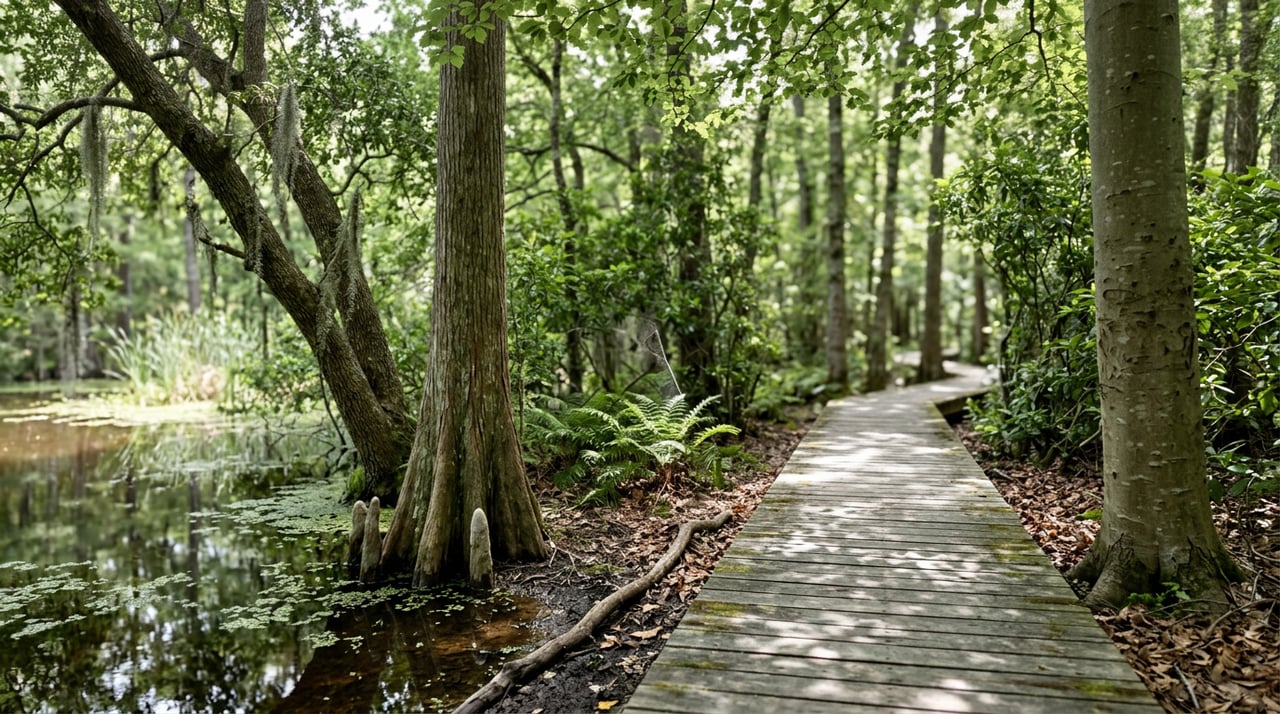
The Corolla Village planning area shows why a site-specific approach matters. The county’s Corolla Village Small Area Plan notes that 40% of the 292-acre study area is wetlands and only 16% is undeveloped, which means buildable land can come with real constraints.
Before you buy, make sure you understand:
Currituck County’s address assignment guidance also makes an important point for buyers: a 9-1-1 address is assigned only after a site plan or survey is provided, and that address is needed for water connection and septic permitting. So even though you may not need the address to submit a building permit, you do need it for other key steps.
If you are building in Corolla, permitting is not a one-form exercise. Currituck County’s residential permit packet may require construction plans, a site plan, stormwater documentation if needed, septic or sewer approval, a well permit if needed, a CAMA permit if needed, a V-zone flood certificate if needed, and lien-agent paperwork.
The county reviews submissions for completeness and code compliance before issuing the permit. That means your timeline can slow down if even one piece is missing or if the lot raises site-specific questions.
In Corolla, CAMA issues come up often enough that they should be part of your early screening. According to Currituck County’s CAMA permit information, shorelines adjacent to the ocean and sound fall under CAMA jurisdiction, and projects in Areas of Environmental Concern can include oceanfront, marsh, wetland, and shoreline work within 75 feet of the normal water line on estuarine shorelines.
CAMA defines development broadly. It can include construction, excavation, filling, pilings, dune alteration, and similar site work. In other words, a lot that looks straightforward online may still need another layer of review once real plans are in play.
One of the biggest land-buying risks in Corolla is assuming utilities work the same way in every neighborhood. They do not. Water and wastewater are subdivision-specific, so you need to verify service for the exact parcel you are considering.
Currituck County says the Southern Outer Banks Water System serves communities including Corolla Village Area, Whalehead Beach, Ocean Sands, Corolla Light, Currituck Club, Monteray Shores, and Pine Island. The same county guidance says new customers should allow at least two weeks for meter installation, while the general page notes complete new installations can take 4 to 6 weeks.
Ocean Sands has county sewer service, but that does not mean every Corolla lot is on sewer. Some parcels will still require septic review, and that can affect design, placement, and timing.
National benchmarks can be useful, but they are only a starting point. The NAHB time-to-build data reported by Eye on Housing shows single-family homes completed in 2024 averaged 9.1 months from start to finish, while homes built for sale averaged 7.6 months from permit to completion. Homes over 6,000 square feet took almost 16 months.
For Corolla, your timeline may run longer than the fastest national averages. Permit requirements, utility coordination, floodplain issues, and lot-specific approvals can all add time before vertical construction even begins.
If you are buying land in Corolla for a vacation-rental build, think in phases:
The bigger the home, the more important it is to budget time conservatively.
National cost data is helpful for framing expectations, not setting your exact budget. The NAHB 2024 construction cost survey found an average construction cost of $428,215, or about $162 per square foot, for a typical single-family home. NAHB also notes that this is a broad benchmark, not a precise estimate for a specific home in a specific market.
That warning matters in Corolla. Coastal site work, elevation requirements, foundation design, drainage solutions, and compliance costs can vary widely by lot. A parcel that needs extra engineering, stormwater planning, or specialized foundation work may look affordable at first and then shift your total project cost in a big way.
If your goal is rental performance, your design should match how Corolla guests actually book. AirDNA data shows that 61% of local listings have 5+ bedrooms, 24% have 4 bedrooms, and all listings are entire homes. Common baseline amenities include internet, kitchen, air conditioning, washer, and TV.
That suggests a clear market signal. In many cases, a new Corolla vacation-rental build will be better positioned if it offers multiple en-suite bedrooms, spacious gathering areas, and easy indoor-outdoor flow rather than a smaller plan with limited group functionality.
While each lot is different, buyers often evaluate whether the site and plan can support:
The Corolla Village Small Area Plan also points to local priorities like compact building style, traditional coastal architecture, water-quality protection, and tree-canopy preservation. If you are building in or near that setting, design compatibility may be part of the conversation.
In Corolla, storm exposure is not a side issue. It is part of your underwriting. Currituck County’s flood hazard information explains that low elevations, flat topography, high groundwater tables, and poorly drained soils can complicate stormwater flooding.
The county has invested in drainage and pumping work in Corolla, including Whalehead, but lot-specific risk still matters. Floodplain development in special flood hazard areas requires permits and can trigger elevation or design standards, which means foundation design, drainage planning, and insurance costs should be part of your early analysis.
Ownership costs do not stop once construction ends. Currituck County applies a 6% occupancy tax on vacation homes, a 6.75% sales tax on short-term lodging, and a 2025 property-tax rate of $0.62 per $100 of assessed value. The Corolla Fire Protection district adds $0.08, and the county land transfer tax is $1 per $100, according to the county’s occupancy tax and tax information.
Operational logistics also affect owner experience. Currituck County notes that access permits are required for trash and recycling centers, for parking on the 4WD beach north of Corolla, and for re-entry after evacuation. The county also says vacation units require at least four trash containers, with one container per bedroom up to 10, plus regular removal schedules.
Before you go under contract or before your due diligence period ends, try to confirm the following:
In a market like Corolla, strong returns often come from choosing the right lot first, then designing the right product for that lot.
Buying land to build a vacation rental in Corolla is not just about finding an available parcel. It is about connecting lot feasibility, permit path, rental demand, and long-term operations into one clear decision. That is especially important if you are an absentee owner or investor who wants fewer surprises between purchase and first booking.
If you want a data-driven second opinion on land in Currituck or a plan for how a build could perform as a rental asset, Brook Sparks can help you evaluate the opportunity with local market insight, investor-focused guidance, and operational perspective.
Stay up to date on the latest real estate trends.

I provide expert guidance for buyers, investors, and property owners looking to maximize value in coastal real estate. By understanding each client’s goals—whether lifestyle-driven or investment-focused—I help identify properties that align with long-term success. My services also include consulting for existing owners, with strategies focused on pricing, performance optimization, and simple improvements that increase revenue and visibility year-round.