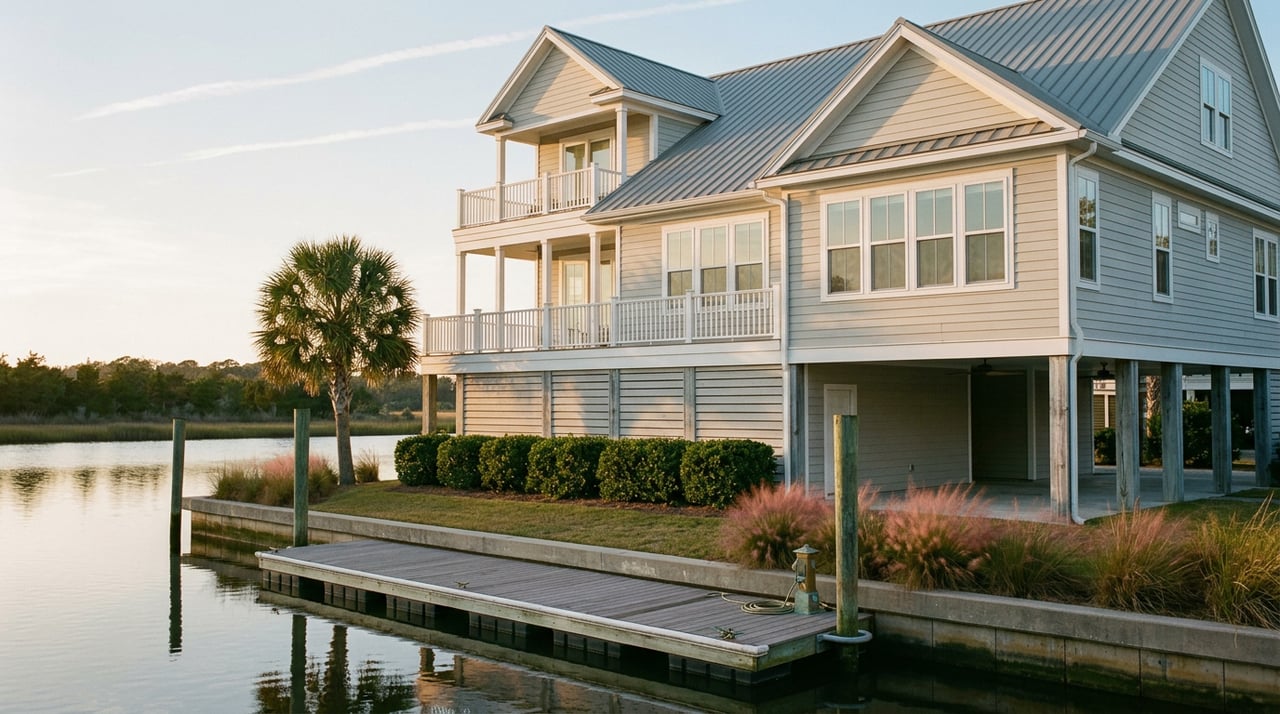
The Corolla Herd Isn't Bigger This Year. It's Just Easier to Find.
September 17, 2026
September 17, 2026
If you've lived north of the paved road in Corolla this summer, you've probably noticed the wild horses showing up in places they don't usually bother with: closer to the beach access paths, bunched up near the southern barrier fence, visible from the road in the middle of the afternoon instead of tucked into the maritime forest at dawn. The easy explanation making the rounds is that 2026 has been a big year for foals. That's true, but it's not the interesting part. The herd hasn't grown by much. What's changed is where it's choosing to spend its time, and that shift is worth understanding if you drive these roads or own property behind the dunes.
The Corolla Wild Horse Fund has been tracking this year's births in public updates, and the numbers are solid without being a record. By midsummer the count stood at ten healthy foals: four colts and six fillies, arriving in a fairly even spread of four in April, three in May, one in June, and two in July. By late summer that number had climbed to twelve, seven fillies and five colts, with the Fund noting one or two more could still arrive before the season closes. That puts 2026 slightly ahead of 2025, when the herd welcomed around nine new members, but it's not the kind of jump that would explain a summer's worth of extra sightings on its own. The herd itself numbers a little over 100 animals, and it has for years.
So if the count didn't move much, why does it feel like there are horses everywhere this year?
The Fund's own field reports point to weather, not reproduction. Back in April, staff observed that biting flies and shifting winds were pushing horses out of the secluded marsh and maritime forest areas where they normally hide with young foals, and onto the open beach in larger, more visible groups, especially near the southern barrier fence. That pattern held through the summer. Heading into Labor Day, with the heat index in Corolla hitting 106 degrees, the Fund was still asking visitors and residents to give the herd extra room, because heat stress was doing the same thing insects had done earlier in the season: forcing horses out of cover and into the open, where people are.
Staff have said plainly that this means more frequent intervention just to keep people and horses apart safely. That's a meaningful data point for anyone who lives here full time. The horses aren't multiplying. They're relocating, seasonally and predictably, in response to conditions that repeat every summer. Understanding that pattern is more useful than counting foals, because it tells you when and where you're actually more likely to have a close encounter on the road.
The Fund has been consistent about what it considers the herd's real threat, and it isn't heat or flies. It's traffic. According to reporting this year, four horses were struck by vehicles in 2025, and two of them died. Chris Winter, the Fund's president and CEO, told Blue Ridge Public Radio this spring that vehicle traffic has climbed every year and that horses have been hit in each of the last two summers, whether on the beach or on the paved roads behind the dunes.
Put those two facts together and the picture sharpens. A summer where heat and insects are already pushing more horses toward roadsides and beach accesses is a summer where the margin for driver error gets thinner, not wider. This isn't a warning aimed at one-week renters unfamiliar with the area. It's just as relevant, arguably more so, for anyone who drives these same stretches of road every day and has started to tune out the horse crossing signs.
North Carolina law backs this up with real teeth: it's illegal to come within 50 feet of a wild horse, and violations can carry civil or criminal fines up to $500 per incident. Meg Puckett, the Fund's Director of Herd Management, put the underlying reason plainly in an interview earlier this year.
Horses are just inherently dangerous no matter where they are.
That's not marketing language from a nonprofit trying to scare people off. It's a herd manager describing an animal that can stand quietly one moment and spook the next, with no warning in between. The 50-foot rule exists because horses that seem calm are not the same as horses that are safe to approach, and a habituated horse is often a more dangerous one, not a friendlier one. Last November, a stallion named Topnotch was removed from the wild after becoming too comfortable around people. Once a Banker horse loses its fear of humans, the Fund's options for keeping it wild narrow quickly.
There's a practical piece of this story that matters specifically to homeowners, not just drivers. In June, a foal on Corolla Beach became entangled in old fencing and managed to free itself before help arrived. The Fund used the incident to make two requests, and both are worth keeping in mind if you own or manage a home in the area:
That second point is a small maintenance item, but it's the kind of thing that gets overlooked on a property that isn't checked in person every week. It's also a reasonable thing to fold into whatever seasonal walkthrough or vendor visit already happens on a rental or second home here.
The Fund does make room for people who want a closer, sanctioned look. Its Mustang Mornings program at the Betsy Dowdy Equine Sanctuary in Grandy wrapped up its 2026 season having welcomed 1,631 visitors, a program built around meeting rescued, gentled Banker horses in a controlled setting rather than approaching wild ones on the beach. The Fund's next public event is a Fall Open House at the sanctuary on November 7, from 9 a.m. to 1 p.m. It's a better way to spend time with these horses than trying to get a photo on the beach during a heat advisory, and it directly supports the organization managing the herd you're sharing the road with the rest of the year.
The herd hasn't gotten bigger in a way that changes daily life in Corolla. What's changed is visibility, driven by a summer of heat and biting insects that pushed horses toward the same beach accesses, road shoulders, and property lines that residents use every day. That's a pattern worth remembering next summer too, not just this one. Slow down near the barrier fence in the heat of the afternoon, keep 50 feet of distance out of habit rather than obligation, and take stock of what's sitting in the yard that a foal could get tangled in.
Keeping a Corolla property genuinely ready for the season, from the fence line to the rental calendar, is the same instinct either way: check the small things before they become a call at two in the morning. If you own here and want a local partner who thinks about the whole property that way, not just the transaction, reach out to Brook Sparks.
Stay up to date on the latest real estate trends.

I provide expert guidance for buyers, investors, and property owners looking to maximize value in coastal real estate. By understanding each client’s goals—whether lifestyle-driven or investment-focused—I help identify properties that align with long-term success. My services also include consulting for existing owners, with strategies focused on pricing, performance optimization, and simple improvements that increase revenue and visibility year-round.